
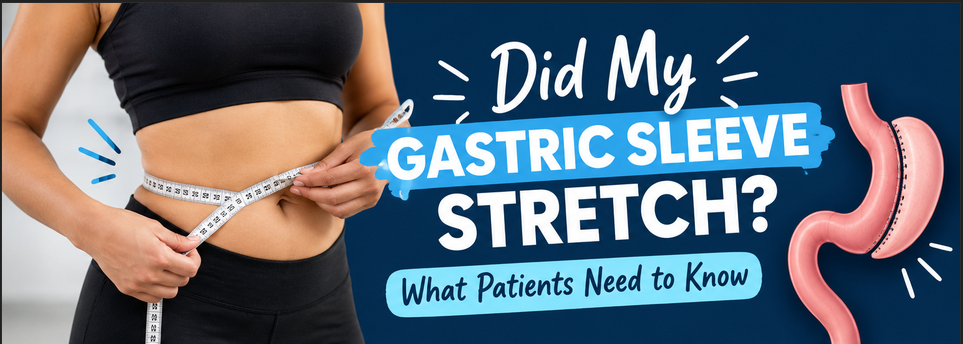
Did My Gastric Sleeve Stretch? What Patients Need to Know
It is one of the most common fears shared in bariatric support groups. You are a few years out from your Gastric Sleeve (VSG) surgery, and suddenly, you realize you can eat more than you used to. The intense, almost immediate physical restriction you felt during your first year is gone, and the scale might even be creeping back up.
The immediate thought is almost always a panic: "Did I stretch my sleeve? Did I ruin my surgery?"
Before you succumb to guilt or stress, take a deep breath. A change in restriction is a completely normal physiological process. However, true, problematic stomach stretching (dilation) does exist, and it requires a specific medical approach. Here is exactly what is happening inside your abdomen, how to tell if your sleeve has actually stretched, and what we can do to fix it.
The Physiology of a "Stretched" Sleeve
To understand stretching, you must understand what the stomach is made of. The stomach is not an inflexible balloon; it is a muscular organ designed by nature to expand (accommodate food) and contract.
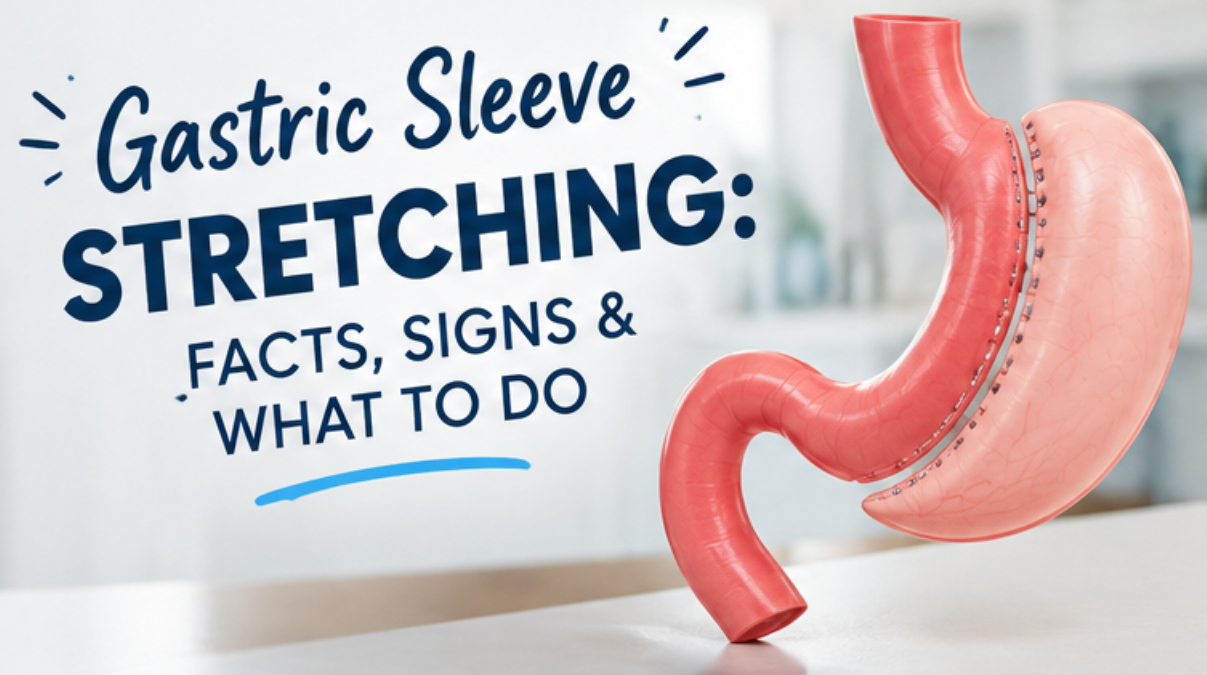
During a Gastric Sleeve, we remove about 80% of this organ, particularly the fundus (the stretchy upper part). What remains is a narrow, high-pressure tube. In the first few months after surgery, that tube is swollen and inflamed from the surgical trauma. This is why you can barely eat two ounces of food early on.
As the swelling completely subsides over the first 12 to 18 months, it is entirely normal to be able to eat slightly more. This is "maturation" of the sleeve, not stretching. However, true dilation (stretching) occurs when the tissue is subjected to chronic, repeated high pressure over years.
- Consistent Overeating: Routinely eating past the point of comfortable fullness forces the muscular walls of the sleeve to expand to accommodate the volume.
- Drinking with Meals: Drinking water while eating acts like a plunger, forcing food through the sleeve faster, which can lead to eating larger volumes and putting pressure on the lower part of the stomach.
- Carbonation: While debated, frequent consumption of heavily carbonated beverages introduces gas into a high-pressure system, causing temporary distension and discomfort, which over time may contribute to laxity.
Is it Stretched, or is it "Slider Foods"?
Before we diagnose a stretched sleeve, we have to rule out the most common culprit for the *illusion* of a stretched sleeve: Slider Foods.
Slider foods are soft, easily dissolvable, or liquid-heavy foods that slide straight through the narrow sleeve without sitting in the stomach to trigger your stretch receptors. Examples include ice cream, chips, crackers, protein shakes, and soft sweets.
The "Dense Protein" Test
If you feel like your sleeve is stretched because you just ate half a bag of potato chips without feeling full, your sleeve is likely fine. Chips turn to mush instantly.
Try eating 4 ounces of solid, dense protein—like grilled chicken breast or steak—slowly. If you hit a hard wall of restriction after a few ounces of solid chicken, your sleeve has not stretched. Your anatomy is intact; your food choices just circumvented the tool.
Signs Your Sleeve Might Actually Be Dilated
If you perform the dense protein test and you are still able to consume normal, pre-surgery portions of heavy solid foods without discomfort, true dilation may have occurred. Common signs include:
- The physical sensation of a "hard stop" when eating is completely gone.
- You are experiencing a rapid, significant return of physical, stomach-rumbling hunger shortly after eating solid meals.
- Significant weight regain (though this can also be driven by metabolic or hormonal changes, not just anatomical stretching).
Diagnostics: How Do We Know for Sure?
At Cervantes Bariatrics, we do not guess based on symptoms alone. If you suspect your sleeve has stretched, the only way to confirm it is through medical imaging.
We use a Barium Swallow X-ray or an Upper Endoscopy (EGD) to look directly at the size, shape, and volume of your stomach. This diagnostic step is crucial because it dictates the treatment plan. If your sleeve is still small, performing another surgery won't solve the problem—we would need to address hormones and metabolism instead.
What Can You Do About It? (Your Options)
If your stomach has stretched and your weight is climbing, you have highly effective options to regain control.
1. The "Pouch Reset" (Behavioral & Mental)
It is impossible to physically shrink a stretched stomach with diet. However, returning to the liquid and puree phases of your post-op diet for 7-10 days can act as a powerful mental reset. It helps break the cycle of carb addiction, eliminates slider foods, and forces you to reconnect with your body's subtle fullness cues.
2. Medical Weight Loss (GLP-1 Medications)
If your sleeve is only mildly dilated but you are battling intense hormonal hunger, we may recommend new-generation weight-loss medications (like semaglutide). These injections can quiet the "food noise" and drastically slow stomach emptying, working perfectly in tandem with your existing sleeve anatomy.
3. Revisional Bariatric Surgery
If imaging confirms significant dilation—especially if accompanied by severe acid reflux (GERD)—a surgical revision is the gold standard solution.
- Conversion to Gastric Bypass (RYGB): We bypass the stretched portion of the stomach, creating a new, tiny pouch. This is the definitive cure if you have developed reflux, and it introduces malabsorption to restart weight loss.
- Conversion to SADI-S: If you have massive regain and no reflux, we can keep the sleeve but dramatically reroute the intestines to maximize malabsorption and metabolic reset.
"Your stomach doing what muscles do naturally is not a moral failing. If your first tool lost its edge, we simply evaluate the anatomy and provide you with a sharper tool."
Frequently Asked Questions
Can I shrink my stretched sleeve back to its original size naturally?
No. Once stomach tissue has chronically dilated and formed new tissue memory over years, it cannot be physically shrunk back down using diet, fasting, or "pouch reset" protocols. Re-establishing physical restriction requires a surgical intervention like a Bypass conversion.
Does a "Re-Sleeve" surgery work?
A "re-sleeve" involves surgically trimming the stretched stomach back down. While technically possible, it is rarely our first recommendation. It does not alter your metabolism or address reflux, and the stomach has a high risk of simply stretching again. Converting to a procedure with a malabsorptive component (Bypass or SADI) provides far better long-term success.
If I have severe acid reflux, does that mean my sleeve stretched?
Not necessarily. Severe reflux (GERD) is often caused by the high pressure of the sleeve pushing against a weakened esophageal valve, or a hiatal hernia. You can have a perfectly tight, small sleeve and still suffer from debilitating GERD. Both issues, however, are best resolved by converting to a Gastric Bypass.
Let's Look at the Facts, Not the Fears.
Stop guessing and stressing. Let our specialized bariatric team evaluate your anatomy through proper diagnostics. We will help you understand exactly what is happening inside your body and map out the right medical or surgical plan to reclaim your success.